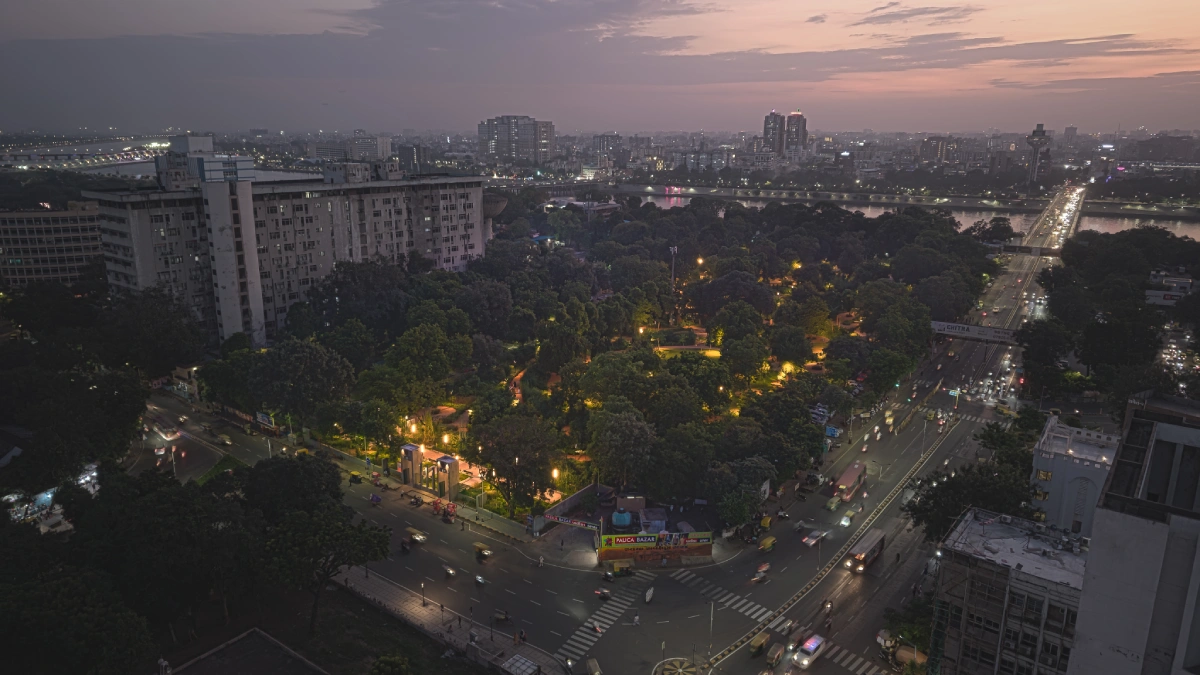
Lighting a restored heritage garden demands a different kind of restraint from a new-build landscape. At Sardar Baug, the site carries the memory of six centuries of civic life — the lighting had to extend that life into the evening without imposing a contemporary character onto a place defined by its age and its trees.
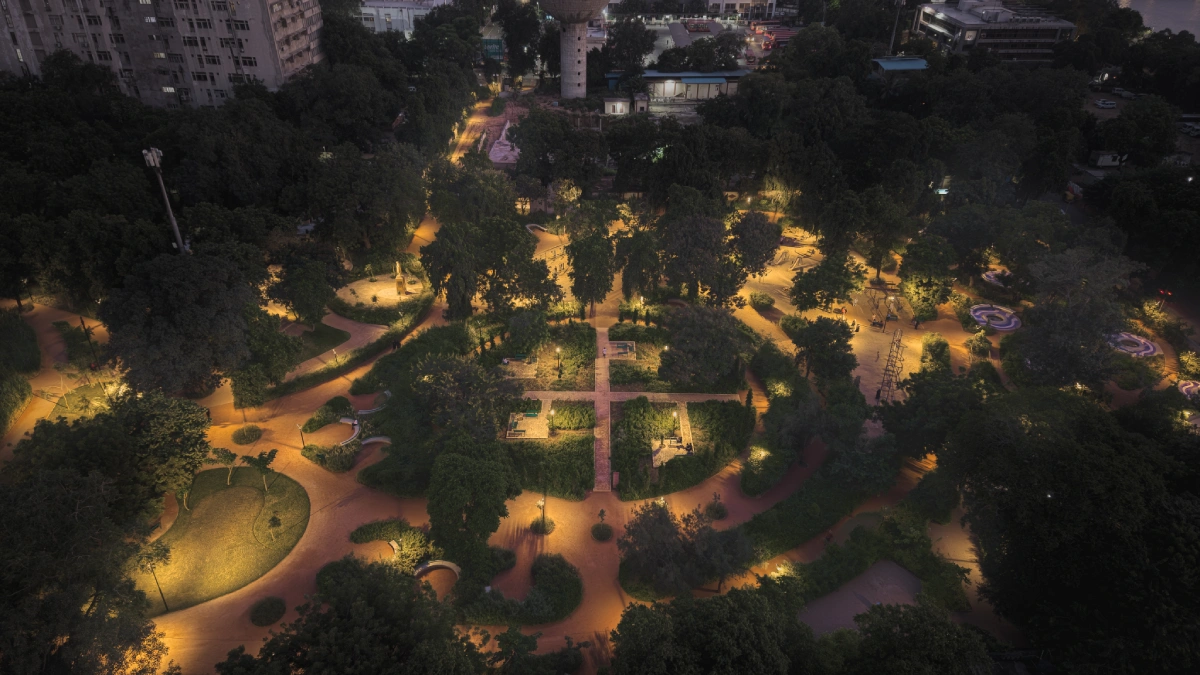
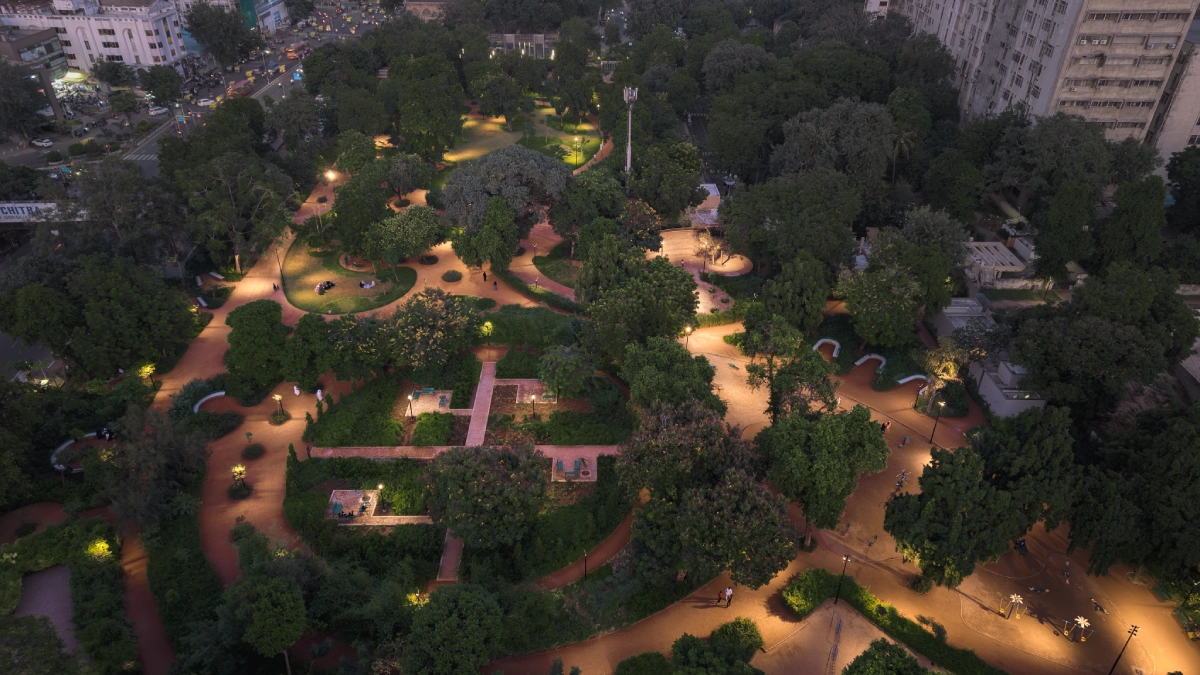
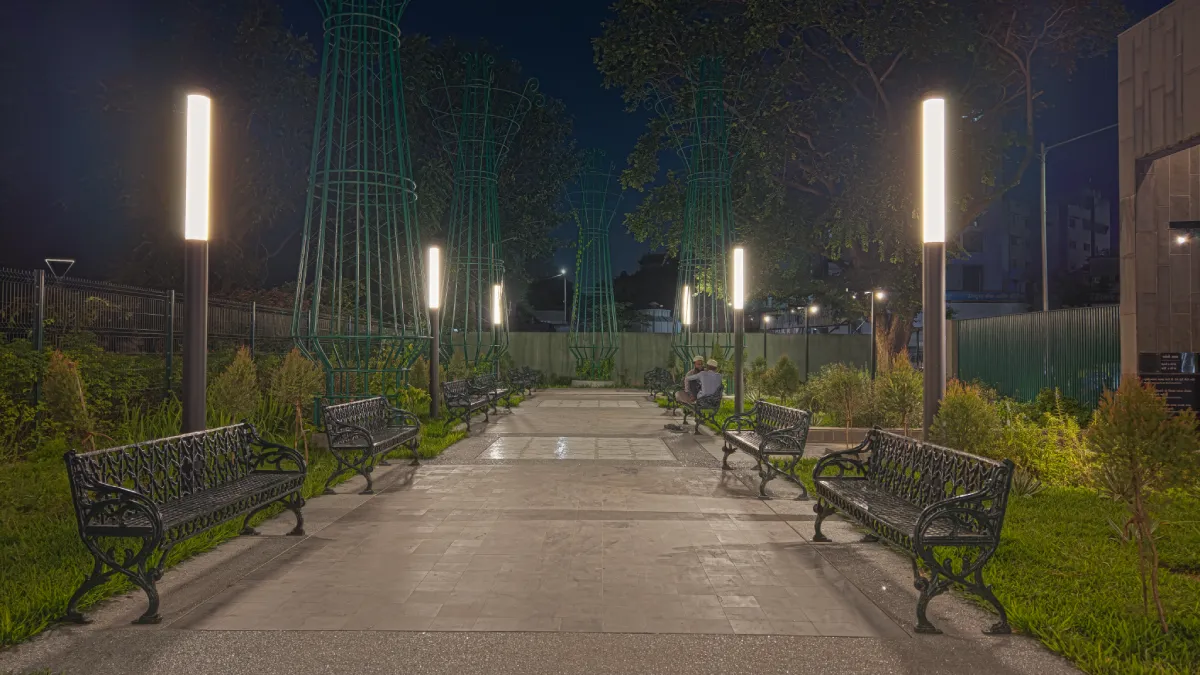
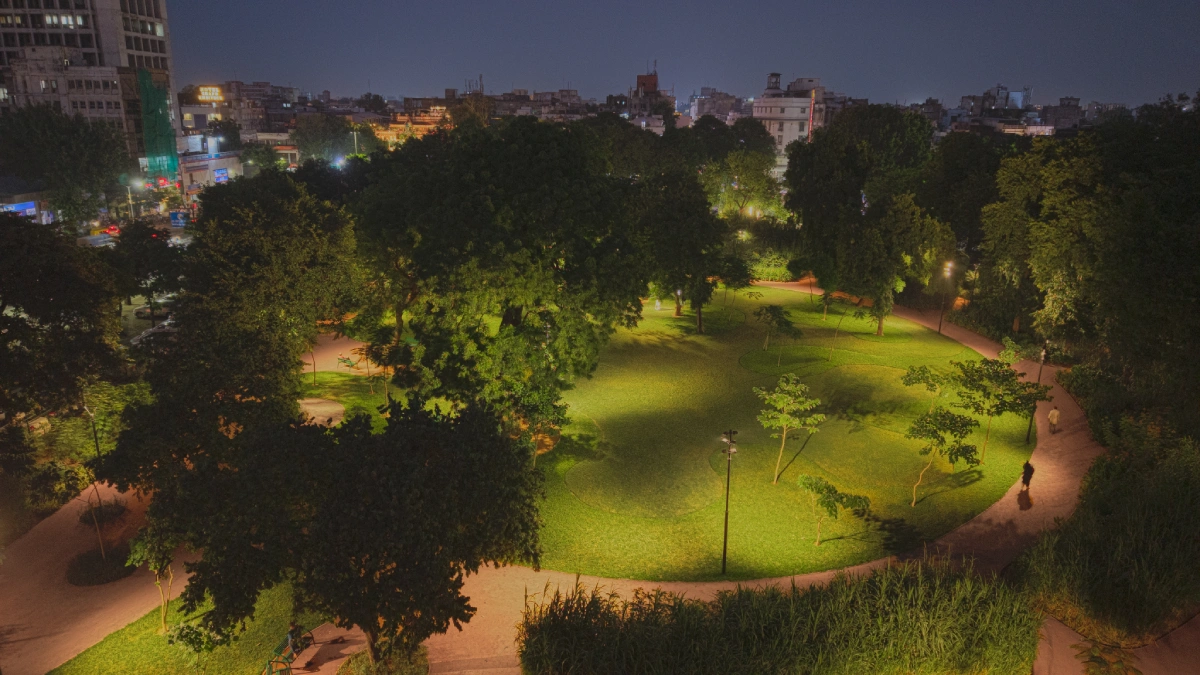
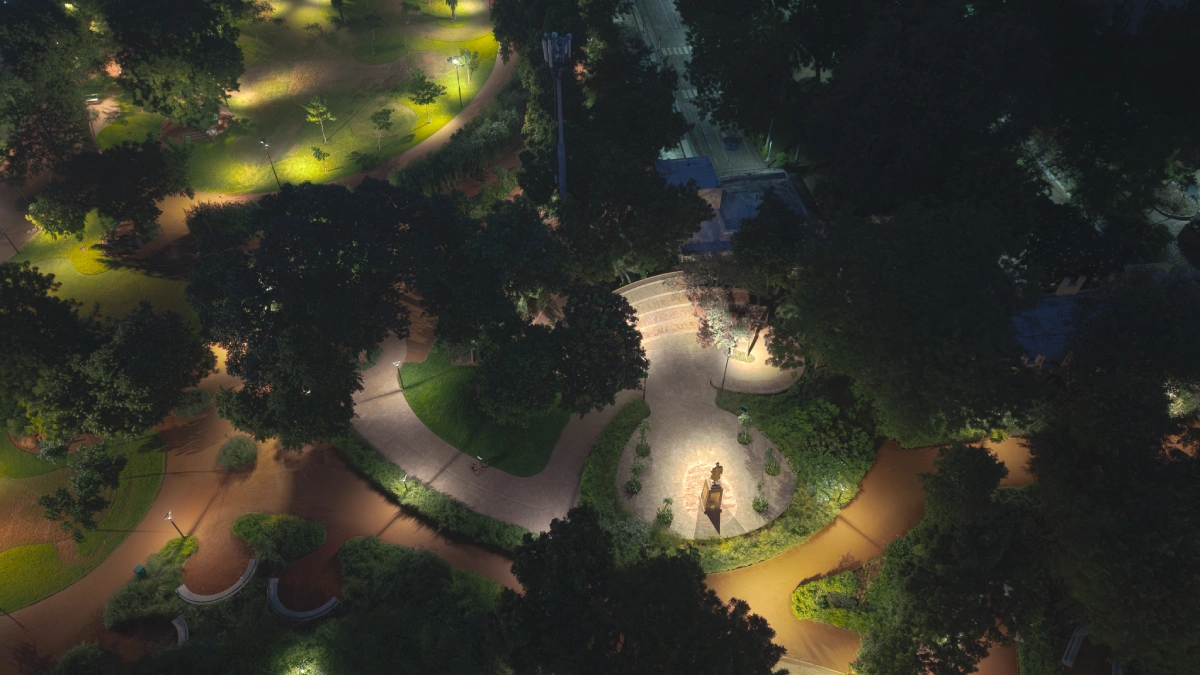
The formal garden at the centre of the park — its cross-axial layout, planted beds, and structured pathways visible clearly from above — was treated with low-mounted path bollards that mark the geometry without flooding it. Warm-white uplighting was applied selectively to mature specimen trees, revealing trunk structure and canopy mass while preserving the depth of shadow between them. The result, visible in the aerial photographs, is a garden that reads as inhabited and cared for after dark, without losing the organic density that defines it.
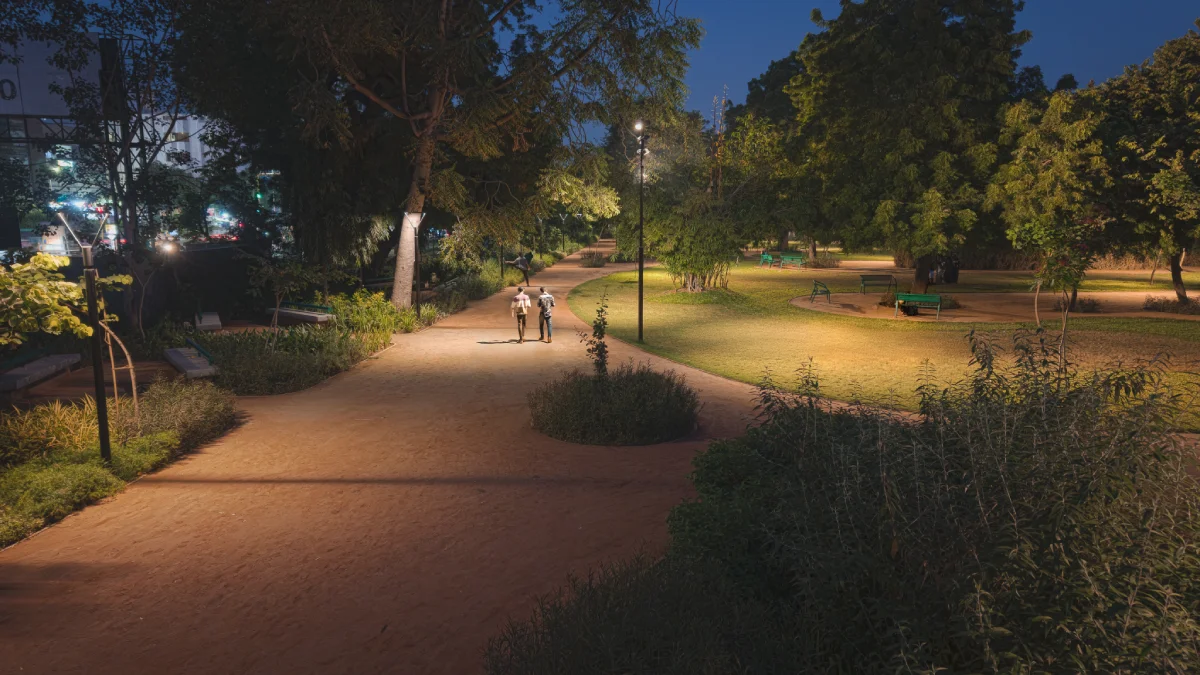
The statue precinct — a focal point within the park — received restrained accent uplighting that acknowledges its civic significance without overstating it. Along the winding outer paths, low-level luminaires cast warm pools of light onto the ground plane, guiding movement while allowing the tree canopy overhead to remain in its natural darkness.